


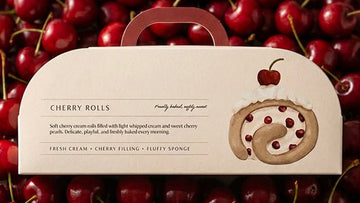
In a market dominated by plain brown paper boxes, custom bakery packaging represents a disruptive upgrade. It allows your desserts to stand out with the same elegance as the cupcakes inside. A custom cake box is not just packaging—it is your brand’s billboard, your silent salesperson, and the very first impression customers form before they taste your products.
Are you ready to add a little packaging magic and turn your bakery into the most talked-about spot in town? Let’s roll up our sleeves and make it happen.

At its core, custom bakery packaging transforms packaging from a cost item into a profit driver.
A standard box serves a logistical function: it moves a cake from the kitchen to the customer, and its mission ends there. Custom packaging, however, serves a marketing function.
The tactile feel when customers receive the box, the resistance as they open the lid, and the smooth motion of pulling out the inner tray—all of these details send subtle signals to the brain: this is a brand that pays attention to detail. Viral bakery products are rarely successful on flavor alone. Flavor is the foundation; packaging is the amplifier.
When your bakery box appears in a social media nine-grid layout, it often needs no caption. A hot-stamped logo or a distinctive color block is enough for instant recognition. That is the magic of custom bakery packaging—it allows the product to speak for itself.

Materials That Match Real Usage Scenarios
High-quality materials are not about thickness; they are about suitability.
1. Flaky pastries require ventilation holes combined with grease-resistant coatings
2. Fresh cream cakes need laminated paperboard to prevent collapse caused by condensation
3. Frozen desserts demand low-temperature-resistant adhesives that will not peel after cold storage
Specialty papers can create strong brand memory, but they also come with longer lead times and potential color variation between batches. A practical strategy is to strike a balance: use imported textured paper for hero products to establish a visual signature, and high-quality domestic white card with spot-color printing for long-selling items. This approach ensures supply chain stability, faster reorders, and uninterrupted daily sales.
Design That Targets the Right Audience
Outstanding design does not aim to please everyone; it aims to resonate instantly with the intended customer.
For youthful, sweet desserts, high-saturation pinks and purples paired with matte gold finishes work well. For minimalist scones, natural kraft paper combined with coarse cotton twine conveys simplicity and authenticity.
The biggest design mistake is excess. Combining foil stamping, embossing, die-cut windows, and unconventional shapes often results in nothing being executed properly. Restraint reflects professionalism. A single, consistent visual signature repeated across a series builds stronger brand equity than changing the entire visual identity every year.

Size and Function: The Ultimate Test of Practicality
Perfect custom bakery packaging is not judged by design alone but by how it performs in real-life scenarios.
Can the box be opened with one hand?
Will it maintain its structure when stacked five layers high for eight hours?
Will the handle remain comfortable if customers carry it home on a shared bicycle?
Custom sizing eliminates internal movement and improves product protection, but it also increases inventory complexity. A proven solution is a modular design: a standardized outer box combined with product-specific inner trays. This approach maintains a secure fit while keeping warehouse management efficient.
Printing Quality: Where Design Succeeds or Fails
Professional printing is the final step in realizing a design—and also the most common source of failure.
Pantone colors on a designer’s screen rarely translate perfectly to print. Holographic silver can easily appear dull or gray once produced. Experienced printers will proactively point out risks: large, solid color areas are prone to scratching, and fine reversed text often requires increased font size.
While small-batch orders have a higher proportion of setup costs, there are effective cost-control strategies. Material sharing with nearby bakeries or aligning orders with monthly production schedules can reduce total costs by 20–30%.

Sustainability Is Now a Baseline Expectation
Sustainable bakery packaging has shifted from an optional feature to a basic requirement. Customers increasingly ask whether a box is recyclable and whether labels are made from paper or plastic. These questions are not ethical pressure—they are part of purchasing decisions.
Sustainability does not mean replacing paper boxes with fabric bags. It means systematic reduction. Lowering paper weight from 350g to 300g can save several tons of virgin pulp annually. Switching from solvent-based inks to soy-based inks reduces decomposition time from hundreds of years to just a few months.
Bagasse, bamboo, and reed fibers—fast-growing plant materials—offer strength comparable to wood pulp while producing significantly lower carbon emissions. Their limitations include sourcing difficulty, higher MOQs, and inconsistent certification standards. A practical starting point is choosing FSC-certified paper and printing clear recycling instructions inside the box. Progress matters more than perfection, and customers notice the effort.
A packaging supplier should not function as a simple order processor. It should act as an extension of your product development team.
Many bakery owners provide minimal instructions and wait for samples, often resulting in mismatched expectations. Effective collaboration begins by bringing the actual product to the supplier. Test dimensions on-site, simulate transport vibration, and verify which internal structures provide the best stability.
Clear communication is essential: specify whether orders are primarily for in-store pickup or delivery, whether riders use insulated boxes, and whether future campaigns require insert slots or traceability labels. A reliable supplier will ask detailed questions about timelines, scalability, and seasonal marketing needs. Multiple sampling rounds are normal, and each iteration reduces risk until the final solution fits perfectly.

Once your new custom bakery packaging is launched, performance evaluation becomes critical.
Sales data provides the most objective insights. Look beyond total revenue and examine structure. Has the repeat purchase cycle shortened? Has the average order value increased? Has the proportion of first-time customers grown? Focus on conversion rate and unit margin—these indicators are more meaningful than subjective design preferences.
Social media mentions represent organic exposure. Beyond likes and comments, observe whether customers tag locations, mention your brand account, or ask where the packaging was produced. Common phrases such as “too beautiful to throw away” or “bought it for the box” reveal real drivers for the next iteration.
Customer feedback should be analyzed by scenario. One-time buyers often highlight functional issues such as uncomfortable handles or boxes softening in the rain—these are critical problems that require immediate correction. Repeat customers tend to comment on gifting value and the unboxing experience, which informs premium upgrades. Structural reliability comes first; emotional refinement follows.
Custom bakery packaging is not decorative—it is a strategic requirement for building viral products. When customers hesitate to discard the box, carry it proudly through the city, or post online saying they purchased the product specifically for the packaging, your brand has completed the transition from product to content.
SNFOOD provides end-to-end custom bakery packaging solutions, covering material selection, structural sampling, and scalable production. Every unboxing moment becomes a shareable brand touchpoint.
There is no need to question whether it is time to upgrade your packaging.
Your customers are already waiting for the next box worth sharing.
Are you ready to become the next viral bakery brand?


