
For wine brands and distributors, shipping multiple bottles is never just a logistics issue. Whether it is a standard six-bottle order or a twelve-bottle holiday gift set, packaging must balance transport protection, storage efficiency, cost control, and brand presentation.
Poorly designed packaging can lead to costly breakage and damage the brand image. On the other hand, excessive packaging can eat into already limited profit margins while creating an unnecessarily heavy or over-engineered experience for the end customer.
This article takes a structural approach to examine how a practical custom wine box packaging solution can be designed to meet the demands of modern wine shipping and retail.

The biggest challenge when shipping multiple wine bottles is preventing bottle-to-bottle and bottle-to-box-wall impact. During real-world transportation, packages are routinely dropped, stacked, shaken, and handled roughly. Without an effective internal support system, the risk of broken bottles can increase significantly.
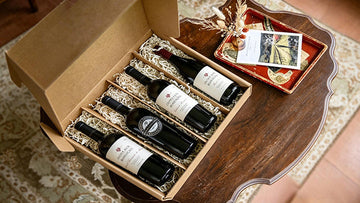
Molded pulp inserts and reinforced corrugated dividers are currently among the most widely used and proven solutions. Molded pulp inserts provide excellent cushioning performance by closely supporting the bottle neck and body while distributing impact forces throughout the packaging structure. For brands that prioritize sustainability, virgin or recycled molded pulp can provide reliable protection while also supporting consumers' growing expectations for environmentally responsible packaging.
High-density corrugated dividers offer a practical balance between compression strength and cost, making them particularly suitable for high-volume wholesale shipments. One important detail to consider is whether the insert is tall enough to support the upper section of the bottle body. This matters because the shoulder area of a glass wine bottle can be especially vulnerable to impact.
A multi-bottle wine packaging solution should be structurally adjusted according to where the product is ultimately going.
1. The E-Commerce Approach: Direct-to-Consumer Shipping
For DTC (Direct-to-Consumer) sales, packaging needs to withstand the rough handling that often comes with parcel delivery and courier sorting. In this situation, a “double-layer protection” strategy is recommended.
The outer carton can use a strong double-wall corrugated box, while the interior is fitted with a custom molded pulp insert or honeycomb paperboard frame designed to keep every bottle securely locked in position.
In recent years, integrated cushioning corrugated boxes have also become increasingly popular. These designs use foldable corrugated paperboard instead of foam, simplifying the packaging process while maintaining reliable shipping protection. At the same time, they can support a more convenient and premium unboxing experience, including packaging designs that reduce or eliminate the need for excessive tape.

2. The Retail & Gift Approach: Packaging That Displays
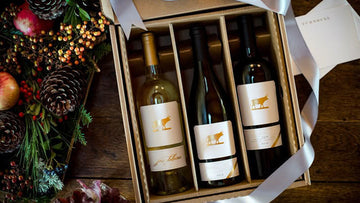
When the wine is intended for tasting events or retail stores, the display function of the packaging becomes more important. In these situations, folding gift boxes with an open-and-display design or sturdy hinged book-style boxes can be more suitable.
These structures are often stronger and more stable, allowing customers to pick up, inspect, and handle the packaging on a retail shelf. For gift-oriented applications, a carry-handle design can also be highly practical. It allows customers to take the multi-bottle wine gift set home conveniently while reducing the need to provide a separate shopping bag.
For international wine shipping, freight costs are often influenced by both dimensional weight and actual weight. With multi-bottle wine packaging, the weight of the packaging itself becomes an important hidden cost.
Corrugated paperboard remains the primary material for most shipping boxes, but its basis weight and construction need to be carefully calculated. Heavier board may appear stronger, but excessive stiffness does not necessarily provide better cushioning. In many cases, a well-designed structure using moderately rigid paperboard can offer more effective protection.
In recent years, high-strength lightweight paperboard, such as kraft board with a high burst strength, has allowed brands to reduce the overall packaging weight without sacrificing essential protection. This can help lower transportation costs over long-distance shipments.
At the same time, the wider adoption of FSC-certified materials gives wine brands a practical way to support their sustainability positioning and communicate responsible sourcing through their packaging.
Packaging designed purely for protection is no longer enough. Today, the packaging itself has become part of the marketing experience.
A multi-bottle wine box provides a much larger “canvas” for brand communication than a single-bottle package. With custom wine box packaging, printing techniques and surface finishes can make a significant difference in the final appearance.
Hot foil stamping can be used not only for the brand logo but also to introduce additional visual and tactile details to the box. Spot UV coating can highlight specific graphics or design elements, helping the packaging achieve a more premium appearance.
When customers open the package, even a simple brand story or handwritten-style message printed on the internal divider can strengthen the emotional connection between the brand and the consumer. A standard delivery can therefore become a more memorable wine unboxing experience.

Looking back at the entire packaging strategy, an effective custom wine box packaging solution should combine the following elements:
1. Strong compression and structural performance: Use reinforced corrugated board or high-quality paperboard to ensure the packaging remains stable and resists deformation or collapse during warehouse stacking and long-distance transportation.
2. Precisely fitted internal inserts: Design dedicated inserts for specific bottle shapes, including Bordeaux, Burgundy, or uniquely shaped wine bottles, to minimize movement and prevent bottle-to-bottle contact.
3. Careful logistics cost control: Optimize the packaging structure, such as using integrated or one-piece designs, to reduce unnecessary components and improve overall packaging efficiency.
4. A consistent brand presentation: Extend the brand's visual identity to the outer packaging through customized printing and finishing techniques, creating a stronger and more memorable unboxing experience.
For wine brands involved in importing or distributing wine, it is essential to request multiple rounds of packaging samples from the supplier before moving into mass production. The final packaging should also be tested under simulated transportation conditions, including drop tests and compression tests. These tests provide the most practical way to determine whether the proposed custom wine packaging solution can perform reliably in real-world logistics.
For wine brands, distributors, and retailers looking for custom wine boxes, wine shipping boxes, and multi-bottle wine packaging, working with an experienced packaging manufacturer can help balance protection, transportation costs, and brand presentation from the beginning of the design process.
SNFOOD provides customized wine packaging solutions for different bottle quantities, bottle shapes, shipping requirements, and brand positioning, helping businesses develop packaging that is both practical and brand-focused.


